MBA in Pharmaceutical Management in USA for Indian Students
Table of Contents
- Top 10 Universities Offering MBA in pharmaceutical management in USA
- Why choose for MBA in pharmaceutical management in USA
- MBA in pharmaceutical management in USA Eligibility and Admission Requirements
- Year-wise Curriculum for MBA in pharmaceutical management in USA
- Tuition Fees and Duration of MBA in pharmaceutical management in USA
- How to Apply for MBA in pharmaceutical management in USA
- Scholarships available for an MBA in pharmaceutical management in USA
- Career Opportunities after MBA in pharmaceutical management in USA
- Conclusion
Pursuing an MBA in Pharmaceutical Management in USA in 2026 offers Indian students an unmatched gateway into the global healthcare market. These intensive 1–2-year programs seamlessly blend core business principles with specialized training in vital areas like drug development, healthcare analytics, and regulatory affairs.
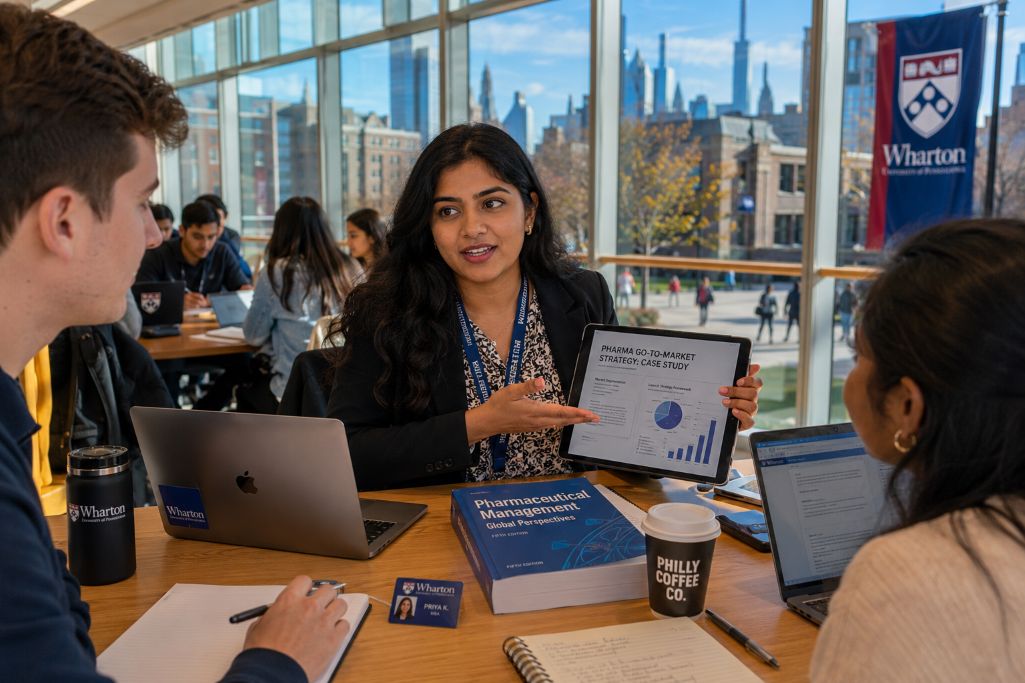
Leading institutions like the University of Pennsylvania (Wharton) and Rutgers Business School place graduates near major pharmaceutical hubs. Tuition generally ranges from $40,000 (₹3,830,800) to $72,000 (₹6,895,440) annually, serving as a highly strategic investment for future healthcare leaders.
Key Highlights Table:
This table provides a quick glance at the primary details and financial metrics for pursuing this MBA program.
Aspect | Key Details | Equivalent in INR |
Program Duration | 1 to 2 years | Not Applicable |
Average Tuition Fees | USD 20,815 to USD 92,800 annually | INR 19,93,452 to INR 88,86,464 |
Average Living Cost | USD 15,000 to USD 30,000 annually | INR 14,36,550 to INR 28,73,100 |
Average Salary | USD 80,000 to USD 140,000 annually | INR 76,61,600 to INR 1,34,07,800 |
Source: Yocket
Top 10 Universities Offering MBA in pharmaceutical management in USA
Pursuing your degree at a globally recognized institution significantly boosts your career trajectory. USA houses prestigious business schools specializing in healthcare and pharmaceutical management, offering unparalleled networking opportunities and direct access to top-tier industry leaders and pharmaceutical giants.
This table showcases the top-ranked universities offering healthcare and pharmaceutical MBAs, along with their specific 2026 national rankings.
University Name | 2026 Specific Rank | Location |
Stanford University | #1 | California |
University of Pennsylvania (Wharton) | #2 | Pennsylvania |
Harvard Business School | #4 | Massachusetts |
Cornell University | #15 | New York |
University of Washington | #20 | Washington |
University of California, Irvine | #44 | California |
Boston University | #46 | Massachusetts |
George Washington University | #53 | Washington, D.C. |
Johns Hopkins University | #68 | Maryland |
Clarkson University | #84 | New York |
Source: 2026 U.S. News MBA Rankings
Why choose for MBA in pharmaceutical management in USA
Studying in USA provides direct exposure to the world’s largest healthcare market. You will gain a competitive edge by learning advanced business strategies tailored to drug development, regulatory affairs, and biotech innovation, ensuring you stand out globally.
Top-Ranked Education: US universities consistently dominate global standings, with institutions like Stanford and Wharton leading the 2026 charts.
Global Industry Hub: USA is home to major pharmaceutical and biotechnology companies, offering direct access to industry giants.
High Return on Investment: Graduates experience immense salary growth, often securing top-tier compensation packages immediately after graduation.
Practical Learning: Programs integrate real-world exposure through hands-on consulting projects and intensive summer internships.
Cutting-Edge Research: US institutions lead the world in academic research, giving students access to state-of-the-art developments in healthcare analytics.
MBA in pharmaceutical management in USA Eligibility and Admission Requirements
Securing a spot in a top-tier US program requires a strong academic foundation and a clear professional vision. Admissions committees evaluate your undergraduate performance, standardized test scores, work history, and English fluency to ensure you can handle the rigorous curriculum.
Academic Degree: A recognized bachelor's degree with a solid academic GPA.
Standardized Tests: Competitive GMAT or GRE scores are frequently required by top institutions.
English Proficiency: High scores in the IELTS or TOEFL exams for international applicants.
Work Experience: A minimum of 2 to 3 years of professional corporate or healthcare experience is generally expected.
Prerequisite Knowledge: A foundational understanding of life sciences or pharmacy is often preferred but not strictly mandatory.
SOP and LORs: Compelling Statements of Purpose and strong Letters of Recommendation from academic or professional supervisors.
Admission Interviews: Successful clearance of personal or panel interviews assessing your leadership potential and career goals.
Year-wise Curriculum for MBA in pharmaceutical management in USA
The curriculum is strategically designed to transform you into a dynamic industry leader. It typically begins with core business foundations in the first year before diving deeply into specialized pharmaceutical subjects, practical experiences, and healthcare strategy during your final terms.
Year 1 Core Fundamentals: Mastery of essential business topics like finance, marketing, accounting, and organizational behavior.
Summer Internships: Crucial practical exposure gained by working at leading pharma companies or healthcare consultancies between academic years.
Year 2 Specialization: Deep dives into regulatory affairs, biotech strategy, healthcare analytics, and drug pricing.
Capstone Projects: Collaborative team assignments aimed at solving real-world challenges for actual healthcare clients.
Electives in Healthcare IT: Coursework exploring the intersection of bioinformatics, digital health, and modern medicine.
Global Immersion Programs: Short-term international study trips to understand and compare global health systems.
Tuition Fees and Duration of MBA in pharmaceutical management in USA
Understanding the financial commitment is crucial before starting your application journey. Most specialized MBA programs take one to two years to complete, with tuition costs varying widely based on the university's prestige, geographic location, and whether it is a private institution.
This table details the specific annual tuition fees for all the top colleges listed previously.
University Name | Annual Tuition (USD) | Annual Tuition (INR) |
University of Pennsylvania (Wharton) | USD 92,800 | INR 88,86,464 |
Harvard Business School | USD 84,760 | INR 81,17,617 |
Stanford University | USD 85,750 | INR 82,12,422 |
Johns Hopkins University | USD 68,000 | INR 65,12,360 |
George Washington University | USD 66,000 | INR 63,20,820 |
University of California, Irvine | USD 64,000 | INR 61,29,280 |
Boston University | USD 58,560 | INR 56,08,342 |
Cornell University | USD 29,500 | INR 28,25,215 |
Clarkson University | USD 37,568 | INR 35,97,889 |
University of Washington | USD 20,815 | INR 19,93,452 |
Cost of Living for MBA in pharmaceutical management in USA
Managing your daily living expenses efficiently ensures a smooth and stress-free academic journey abroad.
A snapshot of the overall living expenses international students can expect while studying.
Expense Type | Average Yearly Cost (USD) | Average Yearly Cost (INR) |
Overall Living Cost | USD 15,000 - USD 30,000 | INR 14,36,550 - INR 28,73,100 |
Housing (Rent) | USD 6,000 - USD 14,400 | INR 5,74,620 - INR 13,79,088 |
Food & Groceries | USD 3,000 - USD 5,000 | INR 2,87,310 - INR 4,78,850 |
Source: Numbeo
Sundry Costs: Transportation, groceries, accommodation and other essentials
A detailed annual budget for daily essentials helps you avoid unexpected financial surprises during your studies.
This table breaks down specific essential expenses you need to budget for every academic year.
Essential Category | Estimated Annual Cost (USD) | Estimated Annual Cost (INR) |
Transportation | USD 600 - USD 1,200 | INR 57,462 - INR 1,14,924 |
Health Insurance | USD 1,500 - USD 3,000 | INR 1,43,655 - INR 2,87,310 |
Books & Supplies | USD 500 - USD 1,000 | INR 47,885 - INR 95,770 |
Source: International Student Study Guide
How to Apply for MBA in pharmaceutical management in USA
The application process requires careful planning and immense attention to detail. From evaluating credentials to crafting compelling essays and acing interviews, presenting a highly professional and well-rounded profile is the definitive key to securing admission into these competitive programs.
Research & Shortlist: Identify and select universities that perfectly align with your career goals and financial budget.
Credential Evaluation: Utilize services like WES to accurately convert your Indian academic grades to the standard US GPA scale.
Test Preparation: Invest time to secure highly competitive GMAT/GRE and IELTS/TOEFL scores before deadlines.
Document Gathering: Write an impactful, authentic Statement of Purpose (SOP) and secure strong Letters of Recommendation.
Submit Applications: Apply meticulously through individual university portals before the early or regular round deadlines close.
Interview Process: Participate in evaluative interviews with admissions directors or alumni to showcase your communication skills.
F-1 Visa Application: Begin the process to secure your student visa immediately after receiving your official I-20 form.
Alumni Networking: Connect directly with past students to strengthen your understanding of the university and improve your essays.
Scholarships available for an MBA in pharmaceutical management in USA
Securing financial aid can significantly ease the burden of international tuition fees. Many universities and private organizations offer merit-based and need-based scholarships to international students who demonstrate exceptional academic achievements or strong leadership potential in the global healthcare sector.
Here are five potential scholarship options that can help offset your educational expenses in USA.
Scholarship Name | Target Audience | Expected Benefit (USD / INR) |
Need-Based Scholarships | Students showing documented financial need | Variable amounts depending on university |
Global Excellence Scholarship | International graduate students with great records | USD 10,000 - USD 25,000 / INR 9,57,700 - INR 23,94,250 |
Chancellor's Merit Scholarship | Academically strong international students | USD 12,000 - USD 14,000 / INR 11,49,240 - INR 13,40,780 |
Dean's Scholarship | Outstanding departmental applicants | Up to USD 5,000 / INR 4,78,850 |
Career Opportunities after MBA in pharmaceutical management in USA
Graduating with this specialized degree opens doors to incredibly lucrative and impactful roles. Top employers actively seek graduates who can seamlessly navigate the complex intersection of healthcare and corporate strategy, offering roles in management, consulting, and advanced global operations.
This table lists prominent employment roles available to graduates of this program.
Target Role | Average Annual Salary (USD) | Average Annual Salary (INR) |
Medical and Health Services Manager | USD 80,000 - USD 115,000 | INR 76,61,600 - INR 1,10,13,550 |
Healthcare Finance Manager | USD 95,000 - USD 135,000 | INR 90,98,150 - INR 1,29,28,950 |
Product Manager (Pharmaceuticals) | USD 110,000 - USD 140,000 | INR 1,05,34,700 - INR 1,34,07,800 |
Biotech Strategy Consultant | USD 105,000 - USD 150,000 | INR 1,00,55,850 - INR 1,43,65,500 |
Regulatory Affairs Director | USD 120,000 - USD 160,000 | INR 1,14,92,400 - INR 1,53,23,200 |
Healthcare Supply Chain Director | USD 90,000 - USD 130,000 | INR 86,19,300 - INR 1,24,50,100 |
Medical Device Marketing Manager | USD 85,000 - USD 125,000 | INR 81,40,450 - INR 1,19,71,250 |
Top 5 Employers for Job Opportunities
Securing a position with a leading global organization is a primary goal for many graduates.
The following top five employers actively recruit individuals holding an MBA in Pharmaceutical Management, offering dynamic career growth, global impact, and highly competitive compensation packages:
Johnson & Johnson: A massive global conglomerate offering vast opportunities across medical devices, consumer health, and pharmaceutical strategy formulation.
Pfizer: One of the world's premier biopharmaceutical companies, actively seeking leaders for drug commercialization, pricing strategy, and global clinical operations.
Novartis: A leading Swiss multinational heavily recruiting MBA graduates to drive their innovative healthcare solutions and market access strategies within the US.
McKinsey & Company (Healthcare Practice): A top-tier management consulting firm that recruits specialized MBAs to advise massive healthcare systems and biotech firms on strategy.
FDA (Food and Drug Administration): The primary US regulatory body, providing highly impactful, stable roles for those interested in public health policy and strict regulatory compliance.
Conclusion
Pursuing an MBA in Pharmaceutical Management in USA in 2026 is a highly strategic choice for ambitious professionals aiming to lead in the healthcare sector. This specialized degree masterfully bridges the gap between scientific innovation and corporate strategy, offering a rigorous academic environment backed by immense networking opportunities.
While the initial investment in tuition and living expenses is significant, the impressive average starting salaries make it worthwhile. By equipping yourself with this specialized knowledge, you are not just advancing your career; you are positioning yourself at the forefront of a booming, resilient industry that profoundly impacts global health. Begin planning your application early to take a confident leap toward a rewarding future, driving innovation and improving patient outcomes worldwide. Planning your next chapter for MBA in Pharmaceutical Management in USA? Connect with our experts to get reliable mentorship and guidance?